Home » Knowledge Center » Electric vs. Diesel Forklift Rental
Every forklift rental conversation eventually comes down to one early decision: electric or diesel? Get it right and the machine disappears into your operation, doing its job without a second thought. Get it wrong and you’re either fighting a machine that can’t handle your ground conditions, or paying for fuel and ventilation workarounds an electric unit would have avoided entirely.
The Quick Answer
If you’re operating indoors — a warehouse, a retail back-of-store, an enclosed facility — electric is almost always the right default. If you’re operating outdoors on unpaved or uneven ground, or need all-day continuous heavy-duty power without a charging break, diesel is usually the better fit. Most of the harder decisions live in the middle ground between these two clear cases, which is what the rest of this guide covers.
When Electric Forklift Rental Is the Right Call
Electric forklifts produce zero exhaust emissions, which matters enormously in enclosed spaces where diesel exhaust would accumulate and create a genuine health hazard for your team. They’re quieter, which matters in noise-sensitive environments like occupied retail spaces or hospitals. And on smooth indoor floors, their tighter turning radius and lower ground clearance aren’t disadvantages at all — they’re often an advantage in tight racking aisles.
When Diesel Forklift Rental Is the Right Call
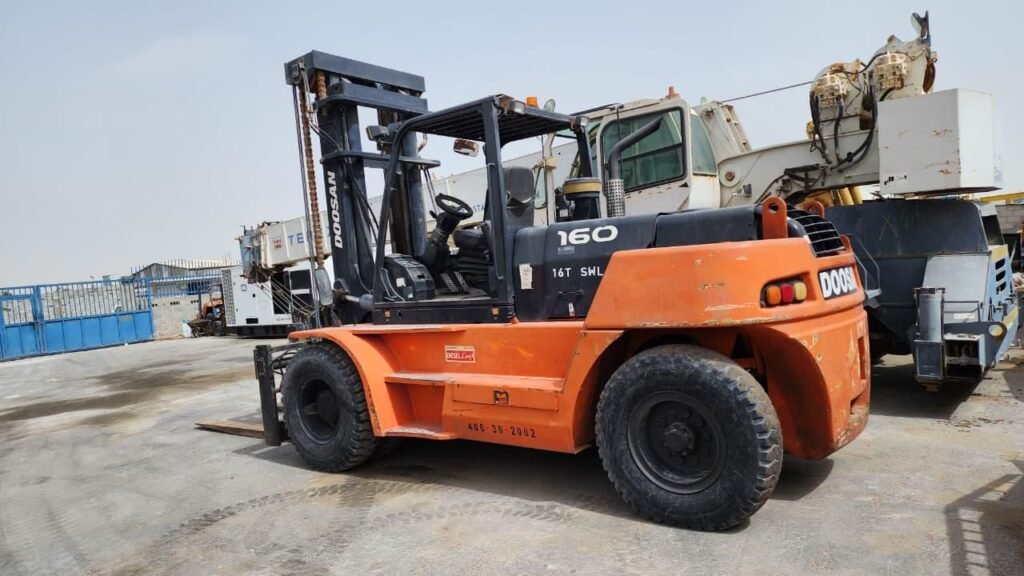
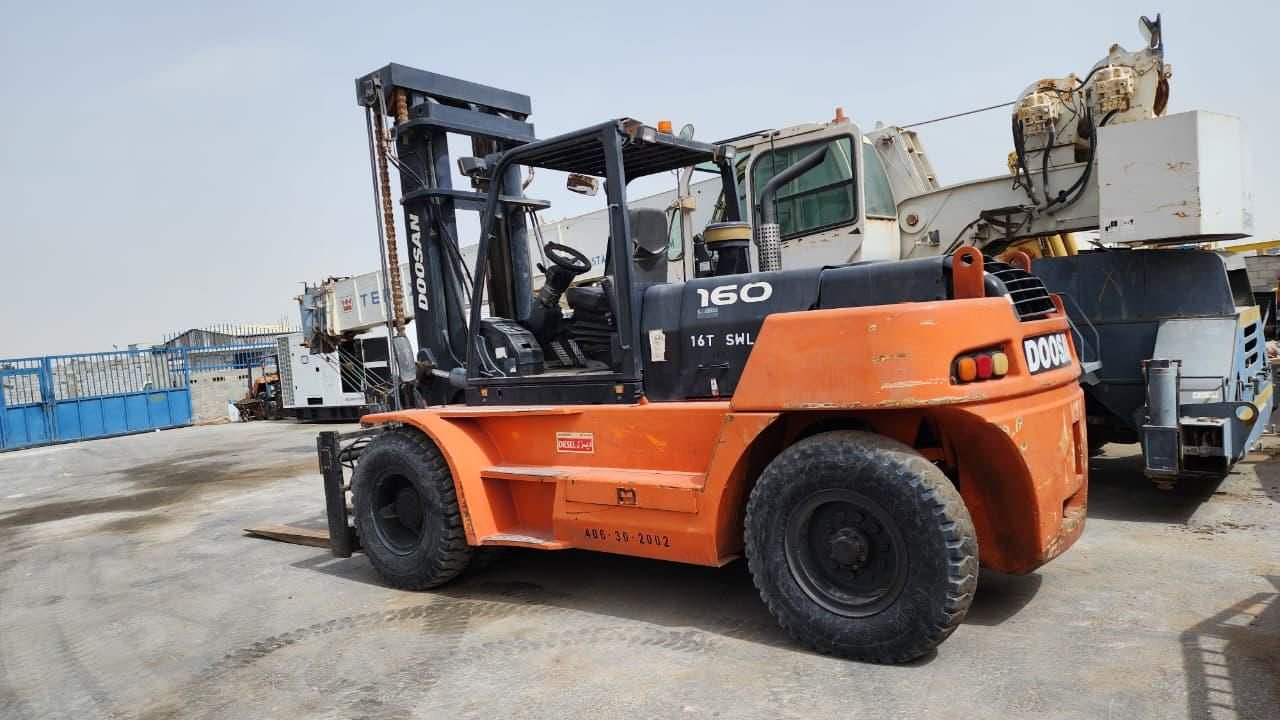
Diesel forklifts handle rough, unpaved, or uneven outdoor ground far better than electric units, thanks to larger tires and a chassis built for that kind of terrain. They also run all day without needing a charging break, which matters for continuous heavy-duty operations like port and yard work. If your site is genuinely outdoors and your operation runs long, continuous shifts, diesel is usually the more practical choice regardless of the emissions and noise trade-off.
Cost Comparison: Upfront vs. Running Costs
Rental rates for electric and diesel units of similar capacity are often comparable, but running costs diverge more than most first-time renters expect. Electricity for charging generally costs less per operating hour than diesel fuel, and electric units have fewer moving parts (no combustion engine) to maintain, which can mean lower maintenance costs over a longer rental. Diesel units, however, avoid any downtime for charging, which has its own value on a time-sensitive job — factor in how much idle time a charging break would actually cost you before assuming electric is automatically cheaper.
Running a Mixed Fleet
Many of our clients don’t choose one or the other — they run electric units for warehouse floor work and bring in diesel forklifts for yard and loading-dock tasks. If your operation genuinely splits between indoor and outdoor work, this mixed approach often makes more sense than trying to force one power type to cover both environments adequately.
Side-by-Side Comparison
| Factor | Electric | Diesel |
|---|---|---|
| Best environment | Indoor, smooth floors | Outdoor, rough ground |
| Emissions | None | Exhaust emissions |
| Noise level | Quiet | Louder |
| Continuous operation | Needs charging breaks | Runs all day on fuel |
| Running cost per hour | Generally lower | Generally higher |
| Maneuverability | Tighter turning radius | Larger footprint typically |
Frequently Asked Questions
Can an electric forklift be used outdoors at all?
Yes, on smooth, paved outdoor surfaces — it’s rough or uneven ground where electric units struggle, not simply being outdoors.
How long does an electric forklift run before needing a charge?
This varies by model and usage intensity — ask your rental provider about the specific unit’s duty cycle, and whether a spare battery or fast-charging option is available if you need extended runtime.
Is diesel always more powerful than electric for the same capacity rating?
Not necessarily for the same rated capacity, but diesel units generally sustain heavy-duty use over longer continuous periods without the performance considerations that come with battery depletion.
Still Not Sure Which One You Need?
Describe your site — indoor or outdoor, ground conditions, and typical shift length — via WhatsApp or call +966 55 936 2375, and we’ll recommend the right option. See our full Forklift Rental guide for capacity and tire-type details too.
How Tire Type Interacts With Your Power Choice
Power type isn’t the only decision that follows from your ground conditions — tire type matters just as much and is easy to overlook when you’re focused on electric versus diesel. Cushion (solid rubber) tires suit smooth indoor floors and pair naturally with electric units. Pneumatic tires handle outdoor and unpaved ground and are the standard pairing for diesel forklifts working yards and construction sites. If you request a diesel unit with cushion tires for outdoor gravel work, or an electric unit with pneumatic tires for a polished warehouse floor, you’re likely to end up with reduced stability or unnecessary wear — mention both your power and surface requirements together when requesting a quote.
Noise-Sensitive Environments Beyond the Obvious
Warehouses and factories are the obvious noise-sensitive case for electric forklifts, but they’re not the only one. Hotels, hospitals, occupied office buildings, and retail spaces during business hours all benefit from electric’s quiet operation in ways that are easy to underestimate until you’re the one explaining to a client or tenant why a diesel forklift is running near their space. If your work happens in or near an occupied commercial environment, electric is worth defaulting to even if the ground conditions would technically support diesel.
Managing Battery Life on Longer Rentals
For monthly rentals with continuous daily use, battery management becomes a genuine operational question rather than a minor detail. Ask your rental provider whether a spare battery is available for swap-in during long shifts, what the typical full-charge runtime is for the specific model you’re renting, and whether fast-charging infrastructure is something you’ll need to arrange on-site. These questions take five minutes to ask upfront and prevent mid-shift surprises once your rental is underway.
Total Cost of Ownership: Beyond the Daily Rate
Comparing electric and diesel forklift rental costs purely on the daily or monthly rate misses a large part of the real-world cost difference. Diesel units typically carry higher fuel costs per operating hour, particularly with rising fuel prices, while electric units draw on grid electricity that is generally cheaper per hour of run time in Saudi Arabia. Maintenance costs also diverge: diesel engines require more frequent servicing intervals covering oil changes, filters, and exhaust systems, while electric forklifts have fewer moving parts in the drivetrain and correspondingly lower routine maintenance needs. Over a multi-month rental, these operating cost differences can meaningfully change which option is actually cheaper, even if the sticker rental rate favors diesel.
Indoor Air Quality and Enclosed Space Considerations
Diesel forklifts produce exhaust emissions that make them unsuitable for extended use in enclosed warehouses or poorly ventilated spaces without dedicated exhaust extraction systems. Electric forklifts produce zero tailpipe emissions, making them the clear choice for indoor warehouse operations, food storage facilities, and any environment where air quality matters for worker health or product integrity. This is one of the clearest dividing lines between the two options: if your primary use case is indoor, electric is almost always the better fit regardless of other factors, while outdoor and open-yard operations have more flexibility to consider either option.
Matching Power Type to Terrain and Application
Diesel forklifts generally offer better performance on rough, uneven, or outdoor terrain, with more torque available for demanding lifts and no concern about battery range limiting how far from a charging point the unit can operate. Electric forklifts perform best on smooth warehouse and yard surfaces where their quieter operation, lower vibration, and precise control are genuine advantages, particularly for operators handling delicate or high-value goods. Construction sites with unfinished ground, gravel, or significant gradient changes tend to favor diesel, while distribution centers, retail backrooms, and finished industrial floors tend to favor electric.
Planning Your Charging or Fueling Infrastructure
Renting an electric forklift means confirming your site has adequate charging infrastructure, or arranging for charging equipment as part of the rental package, before the unit arrives. Standard charging cycles typically run overnight, so single-shift operations rarely have issues, but multi-shift or continuous operations need to plan for either a spare battery swap system or fast-charging capability to avoid downtime. Diesel forklifts avoid this planning step entirely, since refueling simply requires a fuel supply on or near site, which can be an advantage for shorter-term or temporary project locations where installing charging infrastructure isn’t practical.
Typical Choices by Industry
Warehousing and retail distribution operations in Saudi Arabia lean heavily toward electric forklifts given their indoor operating environment and the value of quiet, emission-free operation around staff and customers. Construction and outdoor material handling projects lean toward diesel given the rougher terrain and the practical difficulty of managing charging infrastructure on a temporary job site. Manufacturing facilities often use a mix of both, running electric units on the finished factory floor and diesel units in outdoor yard and loading areas. If your operation spans both environments, renting both types for their respective zones is often more efficient than trying to find a single unit that compromises on both fronts.