Home » Knowledge Center » Man Lift Rental in Saudi Arabia: Types, Uses, and How to Choose
Man Lift Rental in Saudi Arabia: Types, Uses, and How to Choose
Man lifts, also known as aerial work platforms, give workers safe, elevated access for maintenance, installation, and construction tasks across Saudi Arabia’s warehouses, hotels, and job sites. This guide covers the main man lift types available for rental, how to match one to your job, and what to check before booking.
On This Page
- What a Man Lift Is and How It’s Used
- Main Types of Man Lifts
- How to Choose the Right Man Lift
- Indoor vs. Outdoor Applications
- Safety Considerations
- Rental Duration and Cost Factors
- FAQ
What a Man Lift Is and How It’s Used
A man lift is a mobile platform that raises one or more workers to an elevated working height, used for tasks ranging from changing light fixtures and servicing HVAC equipment to installing signage, performing facade maintenance, and supporting construction and electrical work at height. Man lifts have largely replaced ladders and scaffolding for many of these tasks because they offer a stable, code-compliant working platform that can be repositioned quickly as work progresses across a site.
Main Types of Man Lifts
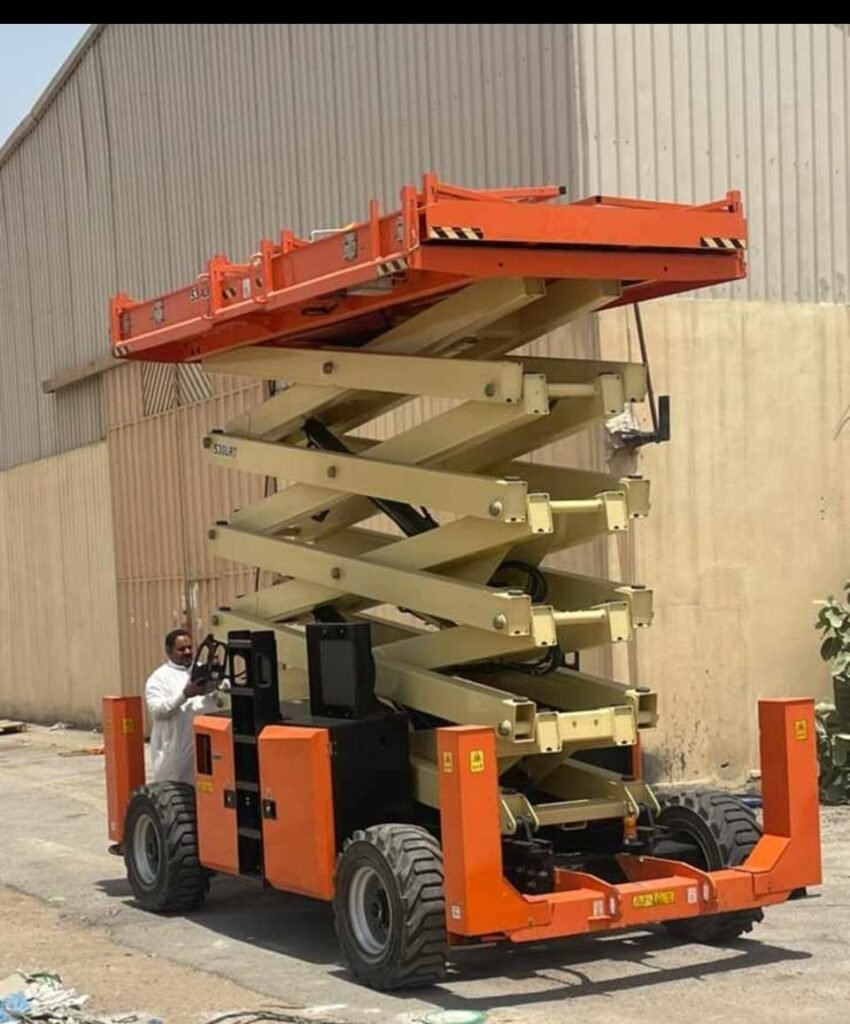
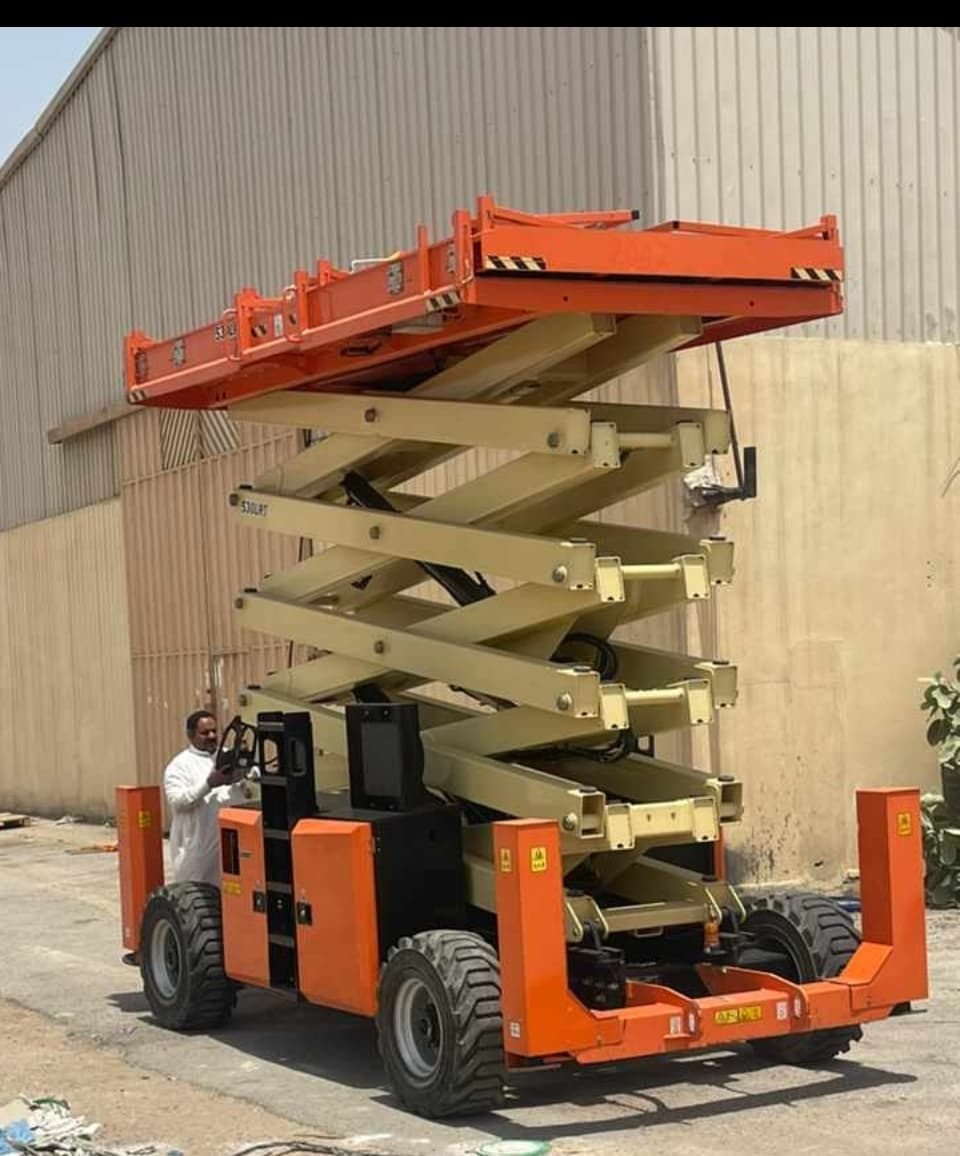
Scissor lifts raise a platform straight up in a vertical path, offering a stable, spacious working area best suited to tasks directly above the lift’s base position, such as ceiling work or straight-up facade maintenance. Boom lifts, available in both articulating and telescopic configurations, extend outward as well as upward, allowing workers to reach over obstacles or at an angle away from the lift’s base, which makes them the better choice for tasks like tree trimming, exterior building maintenance around architectural features, or reaching over existing equipment. Vertical mast lifts offer a compact, lightweight option for lower-height indoor work in tight spaces where a full scissor lift footprint won’t fit.
How to Choose the Right Man Lift
Start by identifying your required working height, measured to where the worker needs to reach rather than just the platform height, since most specifications quote platform height separately from maximum reach. Consider whether your task requires straight-up access, in which case a scissor lift is usually the simpler and more cost-effective choice, or outward and angled reach, which calls for a boom lift. Factor in your working surface: indoor, level floors suit electric scissor and mast lifts, while outdoor or uneven terrain generally requires rough-terrain models with more robust tires and stability systems.
Indoor vs. Outdoor Applications
Indoor applications favor electric-powered man lifts for their quiet, emission-free operation, non-marking tires that won’t damage finished floors, and typically narrower footprints suited to hallways and doorways. Outdoor applications, particularly on construction sites or uneven ground, generally call for rough-terrain or diesel-powered models built to handle slopes, soft ground, and weather exposure. Some jobs span both environments, such as a building’s exterior and interior maintenance program, in which case renting both an indoor electric unit and an outdoor rough-terrain unit for their respective zones is often more practical than compromising with a single unit.
Safety Considerations
Every man lift operator should be trained and certified for the specific equipment type being used, since scissor lifts and boom lifts have different stability characteristics and operating procedures. Fall protection equipment is standard practice for boom lift operation given the platform’s ability to move outward from its base, and site teams should always check ground conditions, overhead obstructions, and weather limits before operating outdoors. A reputable rental provider will supply equipment with current safety inspections and can provide operator training or certified operators on request.
Rental Duration and Cost Factors
Man lift rental costs depend on platform height, lift type, and rental duration, with monthly rates offering the best value for extended projects like ongoing building maintenance programs. Short-term daily or weekly rentals suit discrete tasks such as a single installation or repair job. Delivery distance and whether a certified operator is included will also factor into the final quote, so clarifying these details upfront helps avoid surprises when comparing providers.
Frequently Asked Questions
What’s the difference between a scissor lift and a boom lift?
Scissor lifts move straight up and down, while boom lifts extend outward as well as upward, giving them greater reach around obstacles.
Can man lifts be used both indoors and outdoors?
Yes, though the right model differs: electric units suit indoor floors, while rough-terrain or diesel units handle outdoor and uneven ground.
Do I need a certified operator?
Yes, operators should be trained and certified for the specific lift type, and rental providers can supply certified operators if needed.
Related Resources
Scissor Lift Rental Hub | Boom Lift Rental Hub | Scissor Lift Rental in Riyadh
Need a man lift for your project? Contact our team to discuss your requirements.
Common Working Height Classes
Man lifts are generally grouped by maximum working height, with compact units covering roughly 6 to 8 meters suited to single-story interior work, mid-range units covering 10 to 16 meters for most commercial building maintenance, and larger units extending beyond 20 meters for high-rise facade and structural work. Choosing a height class with some margin above your immediate need is often wise, since underestimating required reach mid-job means either working unsafely at platform-edge extension or having to swap equipment partway through a task.
Common Applications by Industry
Facilities management teams rely heavily on scissor lifts for routine indoor maintenance tasks like lighting replacement, ceiling repairs, and HVAC servicing in offices, malls, and hotels. Construction contractors use boom lifts extensively for exterior work including facade installation, painting, and structural steel connections at height. Telecommunications and utility contractors favor boom lifts for their extended outward reach when working around existing infrastructure like power lines or rooftop equipment. Warehousing operations use both scissor and vertical mast lifts for high-shelf maintenance and racking installation work that doesn’t fit standard forklift access.
Rough-Terrain vs. Standard Models
Standard electric man lifts are built for smooth, level indoor surfaces and typically feature non-marking tires and tighter turning radii suited to hallways and finished floors. Rough-terrain models use larger, more aggressive tires and more robust hydraulic systems designed to handle slopes, soft ground, and uneven outdoor surfaces common on active construction sites. Choosing the wrong category for your site conditions isn’t just inefficient, it can be a genuine safety issue, since standard models aren’t rated for the ground conditions rough-terrain units are built to handle.
Practical Tips for Booking a Man Lift
Measure your actual required working height at the point of work, not just the platform height, since the two figures differ and manufacturers specify both separately. Confirm your site’s door and corridor widths if the lift needs to travel through a building to reach its work area, since larger units may not fit through standard doorways. Ask about weight limits if the lift will be used on elevated floors or structures with load restrictions, and always confirm current safety certification and inspection dates before accepting delivery of any unit.
Comparing Man Lift Rental Costs by Type
Vertical mast lifts and compact scissor lifts are generally the most affordable option given their lower height range and simpler mechanics, making them cost-effective for routine indoor maintenance tasks. Mid-range scissor lifts covering typical commercial building heights sit in the middle of the pricing spectrum. Boom lifts, particularly larger telescopic models with extended outward reach, command higher rental rates reflecting their more complex hydraulics and greater capability. Matching your actual task requirements to the right category, rather than defaulting to the largest available unit, is the most reliable way to control rental costs.
Managing Man Lifts Across Multiple Sites
Facilities management companies and contractors handling several properties or job sites often find it more efficient to arrange man lift rentals through a single provider capable of coordinating deliveries and swaps across multiple locations. This reduces the administrative overhead of managing separate rental relationships per site and typically allows for more flexible reallocation of equipment between sites as priorities shift during a project or maintenance cycle.
More Frequently Asked Questions
How much weight can a man lift platform hold?
Platform capacity varies by model, typically ranging from around 230 kg for compact units to 450 kg or more for larger boom lifts, covering one to three workers plus tools and materials.
Can man lifts be used at night or in low light?
Yes, though additional site lighting and clear visibility around the work area are recommended for safe operation outside daylight hours.
What happens if weather conditions turn unsafe mid-task?
Operators should lower the platform and cease work when wind speeds or weather conditions exceed the manufacturer’s safe operating limits, which your provider can specify for each model.
Whatever the task, matching lift type, height, and terrain rating to your actual site conditions is the single most important decision in a successful man lift rental, well ahead of secondary factors like brand or unit age.
Pingback: Scissor Lift Rental in Saudi Arabia: Buyer Guide | Al-Kamil
Pingback: Boom Lift Rental in Saudi Arabia: Complete Guide | Al-Kamil