Home » Knowledge Center » Heavy Equipment Rental in Saudi Arabia: A Complete Industry Guide
Heavy Equipment Rental in Saudi Arabia: A Complete Industry Guide
Saudi Arabia’s construction, industrial, and logistics sectors depend heavily on rental equipment to meet the demands of a fast-moving project pipeline, from giga-projects and infrastructure development to routine warehouse and hospitality operations. This guide covers the main categories of heavy lifting and material handling equipment available for rental across the Kingdom, how businesses decide between renting and owning, and the practical factors that shape a successful rental strategy.
On This Page
- The Saudi Heavy Equipment Rental Market
- Main Equipment Categories
- Rent vs. Buy: How Businesses Decide
- Demand by Sector
- Choosing a Rental Provider
- Regional Coverage Across the Kingdom
- Planning Equipment Needs Ahead of Time
- FAQ
The Saudi Heavy Equipment Rental Market
Heavy equipment rental has grown into a core part of how Saudi Arabia’s construction and industrial sectors operate, driven by Vision 2030’s massive infrastructure and giga-project pipeline alongside steady demand from established sectors like retail, logistics, and hospitality. Rather than every contractor and business owning its own fleet, the rental model lets equipment flow to wherever demand is highest at any given time, which has become especially valuable given how unevenly project activity is distributed across the Kingdom’s regions and seasons.
Main Equipment Categories
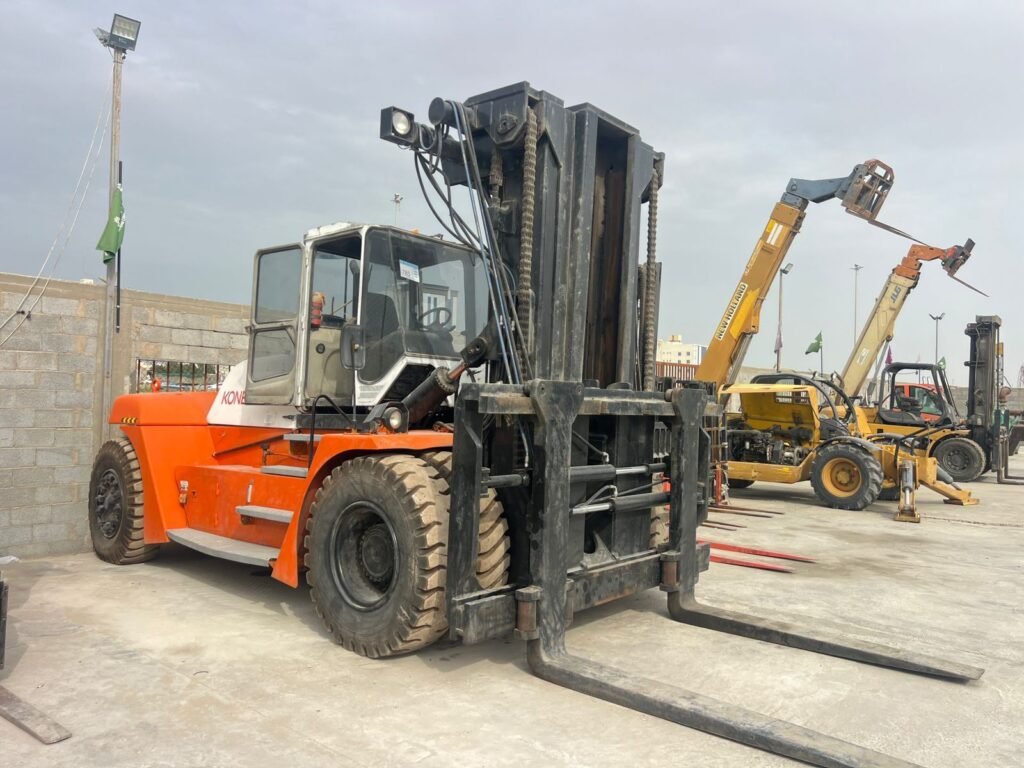
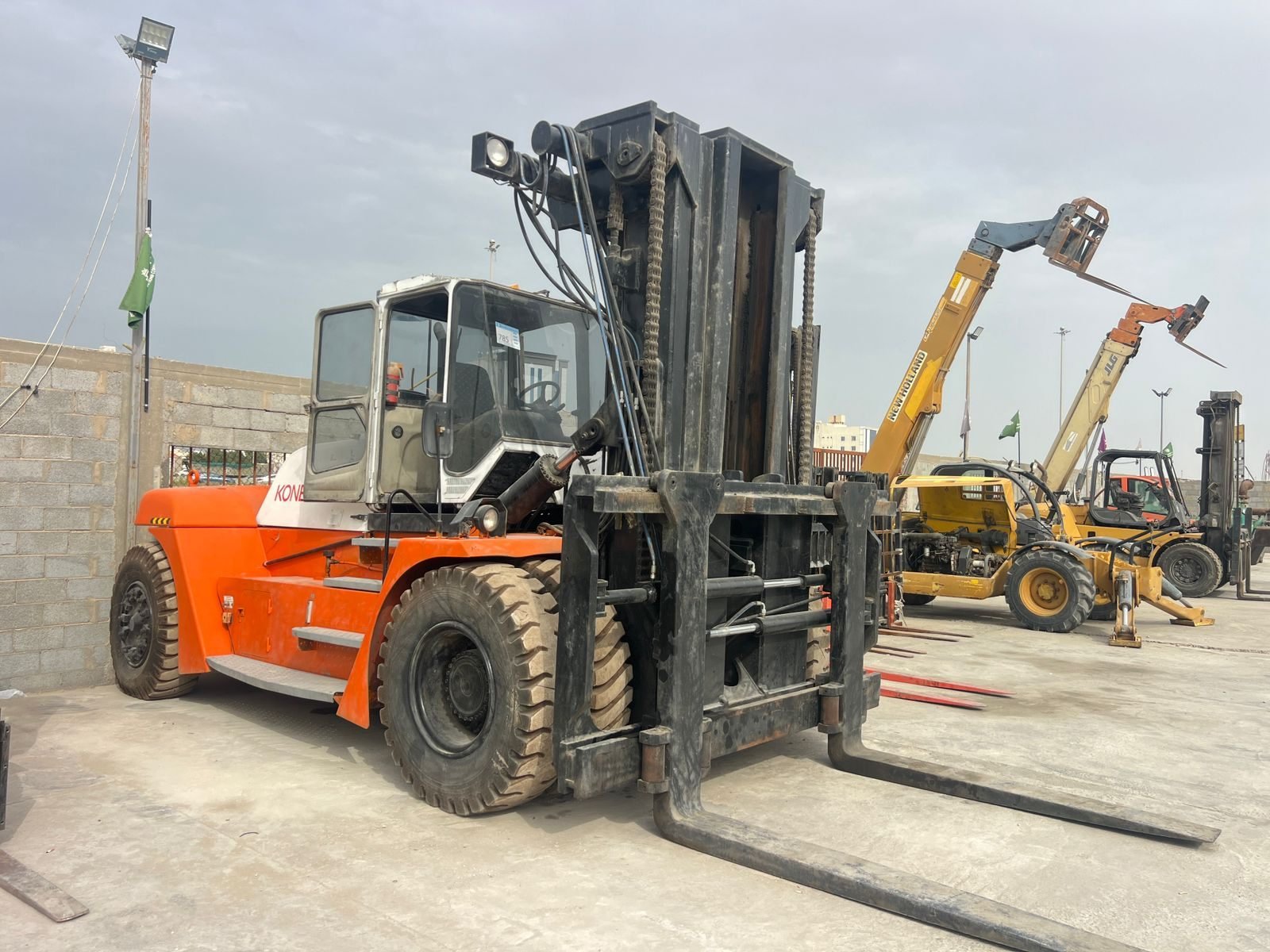
Forklifts remain the most widely rented category, covering everything from compact electric units for warehouse pallet work to heavy diesel models for construction material handling. Aerial work platforms, including scissor lifts and boom lifts, serve the enormous demand for elevated access in maintenance, construction, and facility management. Cranes, spanning mobile, tower, and crawler configurations, handle the structural lifting needs of everything from single-story retrofits to major high-rise developments. Telehandlers offer a hybrid capability, combining forklift-style load handling with extended reach similar to a small crane, making them popular on construction sites needing flexible material placement. Each category serves distinct use cases, and most large projects end up renting a mix of several types simultaneously.
Rent vs. Buy: How Businesses Decide
The rent-versus-buy decision generally comes down to utilization: equipment that will run at high, consistent usage for years typically justifies ownership, while equipment needed intermittently, seasonally, or for a finite project duration is almost always cheaper to rent. Renting also shifts maintenance, certification, and equipment aging risk onto the provider, which many businesses value even when their utilization might otherwise justify ownership, since it converts an unpredictable maintenance cost into a fixed, known rental price. Access to a wider range of equipment types is another factor: a business renting as needed can access exactly the right forklift, crane, or lift for each specific job, rather than making do with whatever it happens to own.
Demand by Sector
Construction remains the largest driver of heavy equipment rental demand nationally, spanning residential, commercial, and infrastructure projects across every major Saudi city. Hospitality and retail generate significant seasonal demand tied to Ramadan, summer tourism in mountain and coastal destinations, and religious tourism peaks in Makkah and Madinah. Industrial and petrochemical facilities in the Eastern Province, particularly around Dammam, Khobar, and Jubail, drive steady demand for heavier equipment tied to plant maintenance turnarounds and ongoing industrial operations. Logistics and warehousing round out demand with a more consistent, year-round need for forklifts and material handling equipment tied to distribution and inventory cycles.
Choosing a Rental Provider
A strong rental provider offers more than just equipment availability: look for a well-maintained fleet with documented inspection records, responsive support if equipment develops an issue mid-rental, and the flexibility to scale your rental up or down as project needs change. Regional coverage matters too, since a provider with depots or delivery capability across multiple cities can support businesses operating on projects spread across different parts of the Kingdom without the delays of long-distance mobilization. Finally, transparent pricing that clearly separates the base rental rate from optional extras like operators, attachments, and delivery charges makes it much easier to compare providers accurately.
Regional Coverage Across the Kingdom
Riyadh, as the largest and most active construction market, generally offers the widest equipment availability and shortest lead times given the concentration of rental fleets based there. The Eastern Province cities of Dammam, Khobar, and Jubail have strong availability of heavier equipment suited to industrial and petrochemical work. Western Region cities including Jeddah, Makkah, Madinah, and Taif see availability shaped by seasonal religious tourism and hospitality demand cycles. Southern cities like Abha have more limited local fleet depth given lower overall population and construction volume, making advance booking especially important for larger equipment in this region.
Planning Equipment Needs Ahead of Time
Booking equipment well ahead of known demand peaks, such as pre-Ramadan preparation, summer tourism season, or a project’s structural phase, consistently secures better availability and pricing than last-minute bookings during high-demand windows. Businesses with recurring or predictable equipment needs benefit from establishing an ongoing relationship with a rental provider, since this often unlocks priority access during busy periods along with more favorable long-term rates compared to one-off bookings. For large projects, mapping out equipment needs phase by phase during project planning, rather than reacting to needs as they arise, avoids the availability and cost premiums that come with urgent, unplanned bookings.
Frequently Asked Questions
What’s the most commonly rented type of heavy equipment in Saudi Arabia?
Forklifts see the highest rental volume given their use across nearly every industry, from warehousing to construction to retail logistics.
Is it cheaper to rent or buy heavy equipment long-term?
It depends on utilization: consistently high year-round use tends to favor ownership, while intermittent, seasonal, or project-based use is typically cheaper to rent.
How far ahead should I book equipment for a large project?
Several weeks to a few months ahead is recommended for larger cranes and specialized equipment, particularly around known seasonal demand peaks.
Related Resources
Forklift Rental | Crane Rental | Scissor Lift Rental | Boom Lift Rental
Need heavy equipment for your next project? Contact our team to discuss your requirements across any region of Saudi Arabia.
Managing Rental Costs Across a Large Project
Large projects juggling multiple equipment types across several phases benefit from consolidating rentals with a single provider wherever possible, since this simplifies billing, delivery coordination, and maintenance response compared to managing several separate vendor relationships. Reviewing utilization regularly during a project, rather than locking in a fixed equipment plan at the outset, helps avoid paying for idle equipment during phases where demand has shifted. It’s also worth negotiating rates for the full expected project duration upfront rather than renewing short-term contracts repeatedly, since providers typically offer meaningfully better pricing for committed longer-term arrangements than for a series of month-to-month renewals.
Safety and Regulatory Compliance
All heavy equipment operating in Saudi Arabia should meet Civil Defense and site-specific safety requirements, with current inspection certificates and properly certified operators as standard practice rather than an optional add-on. Reputable rental providers build compliance into their standard service, supplying documentation proactively rather than requiring renters to chase it down. For businesses managing multiple pieces of rented equipment across a site, keeping a simple log of each unit’s certification status and inspection dates helps ensure nothing falls out of compliance during an extended project, particularly when equipment is swapped or added mid-project.
The Growing Role of Rental in Saudi Arabia’s Development
As Saudi Arabia’s construction and infrastructure pipeline continues to expand under Vision 2030, the rental model is increasingly the default approach for equipment access across projects of every size, from major giga-projects to routine local construction and hospitality maintenance work. This shift favors businesses and contractors who build strong, ongoing relationships with reliable rental providers, since equipment availability during peak demand periods increasingly depends on established priority relationships rather than open-market availability alone. Understanding this dynamic, and planning equipment needs with enough lead time to secure priority access, is becoming a genuine competitive advantage for contractors operating in the Kingdom’s fast-moving project environment.
Attachments, Operators, and Support Services
Beyond the base equipment, most heavy equipment rentals can be paired with relevant attachments and support services that expand what a single unit can accomplish. Forklifts can be fitted with fork extensions or clamp attachments for non-standard loads, cranes come with certified rigging and signaling crews as standard on most bookings, and aerial platforms can be rented with or without trained operators depending on whether your own team holds the necessary certification. Discussing your full task requirements with a provider upfront, rather than requesting equipment by category alone, often surfaces attachment or service options that make a job significantly more efficient than the default configuration would allow.
This kind of consultative approach to equipment selection is one of the clearest signs of a rental provider that understands your project rather than simply processing a booking.